
Rich Mutts
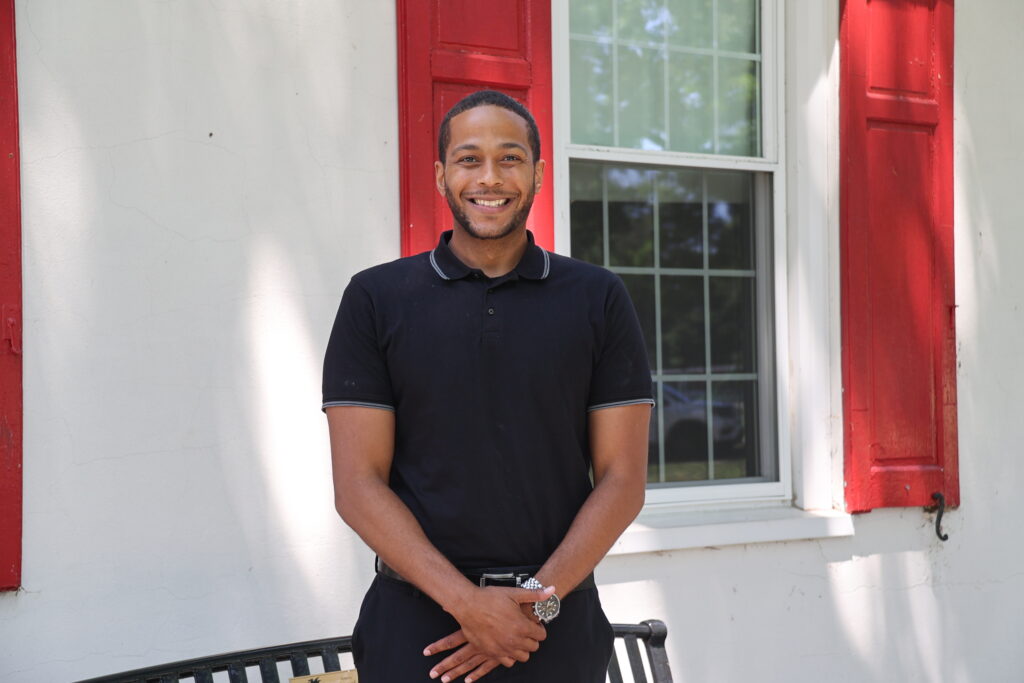
At KO, the work of diversity, equity, inclusion, and belonging is more than a program. It is a practice, a daily human commitment lived out in every classroom, every meeting, and every conversation. And at the center of this work is Rich Mutts, KO’s director of DEIB: calm, thoughtful, reflective, and profoundly grounded in the belief that community begins with understanding ourselves.
While many define DEIB through its acronyms, Mutts roots his approach in something deeper and far more personal: self-awareness and emotional intelligence. “Beyond the words diversity, equity, inclusion, and belonging,” Mutts said, “it all comes down to self-awareness and emotional intelligence. Whether you’re a sixth grader, a senior, or a faculty member, we need to reflect and look within to see what we may be reflecting outwardly. At the end of the day, it just comes down to that inner self and the ability to have that growth mindset.”
This philosophy—humble, human, and deeply relational—guides everything he does at KO.
Mutts’ mission draws strength from the very values that define KO: respect, curiosity, and perseverance. He sees KO’s community as a microcosm of the wider world, a place where people can learn about each other, be respectful, and find common ground amid all our differences. “We all have differences, and that’s okay,” he said. “Those differences don’t have to divide us. We can actually use our differences to bring us together and learn new things from each other.” This mindset shapes his role: breaking down barriers, building bridges, and creating environments where honest dialogue is safe and not avoided.
What an Equitable School Feels Like
Ask Mutts what a truly equitable school looks like, and he won’t describe a policy or a checklist. He describes a feeling. To him, an equitable school is one where students and adults can show up as their authentic selves, imperfections and all. It’s a place where people are encouraged to acknowledge biases, not to shame themselves, but to understand them.
“We all stereotype.” he said. “We all have biases. It’s not the stereotype that’s necessarily bad; it’s acting on those stereotypes without acknowledging that this might be a stereotype.
He invites the community to pause, reflect, and ask: Where is this feeling coming from? Is it fair? Is it true? Should I explore this more? This simple, reflective pause he teaches is the foundation of equity.
Long Term Vision: A Culture of Trust
Mutts is candid that meaningful DEIB work cannot exist without trust. “You have to gain trust. Without trust, we cannot have anything,” he explains.
His long-term vision includes strengthening authentic relationships, building comfort with civil discourse, and transforming conflict into “good friction,” the kind that sparks learning rather than division. “There’s a conflict spectrum,” he said. “Over here is artificial harmony, and the other side is chaos. We want you to share your feelings and thoughts. That’s the goal.”
Listening Deeply: Using Data and Dialog to Understand Students
A core part of Mutts’ practice is creating multiple ways for students to be heard. He plans for the DEIB office to conduct climate and belonging surveys every two years, gathering insights on student identity and well-being. These surveys have already produced essential discoveries, such as identifying LGBTQIA+ students as a group needing more support and recognizing the unexpectedly large number of Hindu-identifying students on campus.
But Mutts stresses that data only becomes meaningful when paired with daily relationship-building.“We can’t overlook the data,” he said, “but the marriage of data with day-to-day human interactions is where the real understanding happens.”
He also introduced an innovative “Respond and Resolve” form, a confidential tool for students to report concerns, ask questions, or advocate for changes in their environment. The goal is to empower students to be upstanders in their own community.
A Day in the Life
Mutts’ days rarely follow a script, but essentially, students are the top priority. “It’s students first,” he said. “If a student is struggling or needs support, that becomes the priority.”
His work spans:
supporting student affinity groups
advising and listening to students who seek him out
collaborating with leadership teams
responding in real time to student needs
helping faculty navigate difficult conversations
facilitating multicultural celebrations
building wellness and inclusion initiatives
His presence, calm, patient, and genuinely attentive, has made him a trusted adult for students who may not know where else to turn.
Cultural Competence vs. Cultural Humility
One of Mutts’ most powerful teachings is the distinction between cultural competence and cultural humility. “Cultural competence is easy,” he said. “Anybody can Google a definition.” He said that humility, however, requires presence, curiosity, and vulnerability. It means “I don’t know it all, but I want to learn more about you.”
Mutts said it’s the ability to understand what a hijab means in a person’s culture, or understanding the fears of Jewish and Muslim people. It means saying: “I don’t know. Will you teach me?”
Supporting Faculty: Creating a Safe Space to Learn
Mutts knows that many educators feel anxious about entering DEIB conversations. His approach: trust, non-judgment, and shared learning.
Many teachers, he notes, have come to him privately saying, “I don’t understand, but I feel comfortable asking you.”
“In this role, you need to have vulnerability in your leadership,” he said, “let the teachers know that you don’t have all the answers. I tell them, ‘We can learn together’.” Once Mutts shows his vulnerability, others feel safe admitting that they, too, don’t have all the answers. “When you create that atmosphere, that’s how faculty and staff begin to self-reflect and grow.”
The school also has robust professional development. In February, workshops on civil discourse and navigating challenging conversations will lead to greater student and faculty accountability and self-reflection.
Building Belonging: Empowering Students to Use Their Voices
For Mutts, belonging is inseparable from relationship and empowerment. “You, the students, make KO what it is,” he tells them. “Your voices matter. Your identities matter.”
He has seen firsthand how one empowered student group inspires another, from Jewish students hosting apples and honey for Rosh Hashanah to Hispanic Heritage celebrations and Diwali observances. These moments ripple outward, building confidence and curiosity across the school. Once one student does it, it gives other students permission.
“They empower one another,” he said. “ We’re building capacity, and we’re building student voices, amplifying the student voices.”
He cited an example about students hosting a conversation about Palestine and Israel, leading another student to create a discussion about the Russia-Ukraine conflict.
Engaging Families: Book Clubs, Partnerships, and Honest Dialogue
And, as a day school, Mutts views parents as an essential part of the DEIB ecosystem, deeply involved in the work we do on campus. He launched a virtual parent book club and collaborates closely with Admissions and Advancement to ensure transparency and shared understanding. He welcomes the energy, passion, and advocacy parents bring.
“Parents should advocate for their children,” he says. “The key is educated advocacy, working together instead of seeing it as us versus them.”
What He Wants People to Understand About DEIB
At the heart of Mutts’ message is a reminder that DEIB is not political, abstract, or divisive. It is profoundly human. “DEIB is emotional intelligence,” he said. “It is relationships. It is togetherness. It is tapping into our humanity. That is the work .”
Although Mutts acknowledges the work is challenging, he feels we need to move forward in a world that is designed to separate us.
Lessons Learned: Lead With Heart, Grace, and Growth
Years of experience have taught Mutts one essential truth: “You cannot do this work without heart.” The emotional landscape of DEIB work is real—joy one day, exhaustion the next. But he chooses humility, grace, and a growth mindset.
“I’m not a know-it-all. I want to be a learn-it-all,” he says, reflecting KO’s own motto: To conquer, one must first conquer oneself. Growth, he believes, is lifelong.
And perhaps his greatest message is this: DEIB is everyone’s work. “It’s not a department. It’s not a person. It’s all of us,” he reminds the community. “There’s no perfection, only progress. If you’re seeking perfection, then you are climbing a slippery slope. Progress every day. That’s it.”
Rich Mutts
Director of Diversity, Equity, Inclusion & Belonging
University of Connecticut B.A.
Concordia College M.A.

“DEIB is emotional intelligence,” Mutts said. “It is relationships. It is togetherness. It is tapping into our humanity. That is the work”