August 27, 2026
Five Ways KO Teachers Are Building a Better Learning Experience
At Kingswood Oxford, the first days of a new school year aren’t only about preparing classrooms, reviewing schedules, and getting ready to welcome students back to campus. They are also a time for our teachers to become students themselves. Before students arrive, KO faculty come together to learn, reflect, collaborate, and ask an important question: How do we build a KO education that is coherent, relevant, challenging, and purposeful for every student?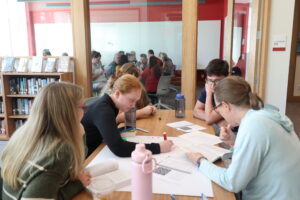
That question is at the heart of KO’s educational goals for the year ahead and reflects something fundamental about our faculty. KO teachers are lifelong learners. They don’t assume that because something has worked in the past, it is automatically the best way to teach today. They continually examine their practice, learn from one another, and think deeply about how students learn best. The result is a better experience for our students.
Teachers as Designers of Learning
One idea shared with faculty captures this mindset particularly well: KO teachers are “designers of learning, not just deliverers of content.” That distinction matters.
Of course, what students learn is important. But our teachers are also thinking about what students will do with that knowledge. As they plan courses and lessons, they are being encouraged to ask bigger questions: What am I asking students to experience? What am I asking them to build? And, ultimately, what am I asking them to become?
Teachers are not simply covering material; they are creating experiences that require students to think, question, make connections, solve problems, and take greater ownership of their learning.
That philosophy is increasingly visible in KO’s growing IMPACT program, which is designed to become more than a collection of individual courses. The goal is for the principles behind IMPACT: real questions, meaningful work, interdisciplinary thinking, and student ownership to influence learning throughout the 6–12 experience.
An Education That Builds From Year to Year
Another priority is coherence. A student’s education shouldn’t feel like a series of disconnected classes, teachers, and school years. At KO, faculty are looking more intentionally at how learning connects across courses, departments, divisions, and ultimately a student’s entire journey from Middle School through Upper School.
The goal is for students to look back on their KO education and recognize how each experience built upon the one before it, not only in what they know, but in their ability to think independently and use that knowledge with curiosity and confidence.
That same commitment to clarity is guiding KO’s continued work around assessment and grading. Faculty are working toward practices that are increasingly clear and consistent so students and families can trust that a grade accurately communicates what a student knows and can do.
Keeping the Thinking With the Student
Teaching well also means responding thoughtfully to a rapidly changing world.
Artificial intelligence is one example. Rather than simply trying to keep AI out of classrooms, KO is focused on helping students understand when these tools can support learning and when they can interfere with it. The technology will continue to change. KO’s expectation will not: “The thinking belongs to the student.”
That principle gets to the heart of what we want for our students. Technology can be a tool, but it cannot replace the intellectual struggle, creativity, judgment, curiosity, and original thinking that allow students to truly learn and grow.
Knowing Students Beyond the Classroom
Our work as educators also extends beyond academics. KO is continuing to strengthen advising across grades 6–12, with benchmarks designed to help advisors support students as they become increasingly independent and learn to advocate for themselves. At its best, advising means knowing a student well enough to recognize when something has changed, knowing when to offer support, and knowing when to encourage that student to take the next step independently.
The goal is simple but powerful: Every student should have at least one adult on campus who truly knows them.
This work is closely connected to another important idea for the year: belonging and accountability go hand in hand. We want students to know they belong at KO, while also understanding that they have a responsibility to help create that sense of belonging for others.
Learning Alongside Our Students
Perhaps one of the greatest strengths of a KO education is that learning here never belongs only to the students.
Our teachers are learners, too. They question. They collaborate. They reconsider. They refine. They look across departments and divisions to understand how one student’s experience fits into a much larger educational journey. And they continually ask themselves whether there is an even better way to help a student understand a difficult concept, find their voice, make a connection, or discover what they can do.
That professional growth ultimately reaches the classroom. When teachers have the time and opportunity to strengthen their craft, students benefit from richer lessons, clearer expectations, stronger relationships, and learning experiences designed with greater purpose.
And families are an important part of that work as well. KO is looking to create more opportunities for ongoing conversation between school and home, particularly around the complicated work of helping adolescents grow. When the adults in a student’s life reinforce common expectations and values, students have a stronger foundation from which to navigate those years.
So as we begin another year, our educational goals extend well beyond what a syllabus covers. We are asking two questions side by side: What do we want our students to know and do? And who are we helping them become?
Thinkers
Blog Main News