October 14, 2026
UConn Physicians Explore Cancer and Healthcare Inequities with KO Students
What if your ZIP code could influence your chances of surviving cancer? That sobering question sat at the heart of a thought-provoking discussion in our Cancer IMPACT class, where Dr. James Wallace, Assistant Professor of Surgery at UConn Health / UConn School of Medicine, and Dr. Dustin Walters challenged students to look beyond cancer biology and examine the social, economic, and systemic barriers that shape who receives lifesaving care. The interactive presentation focused on lung cancer, one of the leading causes of cancer-related deaths, and the troubling disparities in prevention, early detection, treatment, and survival among different populations.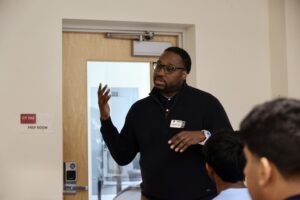
While students explored familiar risk factors, including smoking, secondhand smoke, radon, asbestos, and air pollution, the conversation quickly moved into more complicated territory: Why are some patients diagnosed later than others? Why are Black patients less likely to receive potentially curative surgery? And how can two communities separated by just a few miles experience dramatically different health outcomes?
One of the most striking examples came from close to home. Dr. Wallace shared data comparing life expectancy in West Hartford Center and Northeast Hartford, communities approximately 14 minutes apart. According to the figures, life expectancy was about 84 years in West Hartford Center compared with 69 years in Northeast Hartford, a staggering 15-year difference. The physicians asked students to consider what might explain that gap. Differences in income, poverty, insurance coverage, environmental exposure, and access to preventive healthcare all contribute to the complex picture.
The discussion also explored the distinction between equality and equity. Students learned that providing everyone with the same resources does not necessarily produce equal outcomes. Achieving health equity often means addressing the specific barriers that prevent individuals and communities from receiving the care they need.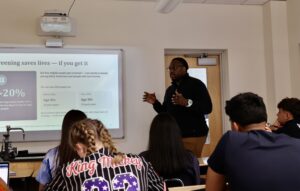
Another revealing example involved the marketing of tobacco products. Students analyzed cigarette advertisements, specifically one featuring baseball great Hank Aaron, and identified how companies have historically targeted particular racial groups and young people through celebrity endorsements, appealing imagery, and flavored products. Tobacco companies targeted the Black community with mentholated cigarettes. The physicians explained how these marketing practices can contribute to differences in smoking rates and, ultimately, cancer outcomes.
The conversation also examined less visible but equally consequential barriers. Language differences, limited transportation, financial constraints, medical mistrust, and even the time physicians can spend with patients can affect whether someone receives appropriate treatment. Students discussed the legacy of the Tuskegee syphilis study and how historical medical abuses continue to affect trust in healthcare institutions. They also learned that patients who need interpreters may need significantly longer appointments to fully understand their diagnosis and treatment options.
Perhaps most importantly, the physicians emphasized that these disparities are not inevitable. They described a healthcare intervention that improved access to timely lung cancer surgery by tracking missed appointments, examining treatment rates by race, and providing patient navigators to guide individuals through the healthcare system. The program substantially narrowed the gap between Black and white patients receiving surgery.
One of the presentation’s most memorable observations captured the challenge: “The disparity isn’t in the scalpel. It’s in who gets to the operating table.”
Students then moved from identifying problems to proposing solutions. Their ideas included bringing cancer screenings directly into underserved communities, creating educational outreach programs, providing transportation assistance, reducing screening costs, and making medical information more accessible in multiple languages.
These discussions are especially relevant to the IMPACT Program, where students are encouraged to apply interdisciplinary knowledge to real-world challenges. As they begin developing their capstone projects, healthcare disparities offer an opportunity to explore meaningful interventions that could improve lives.
Dr. Wallace also shared his own path into medicine, from studying physics and playing football and basketball at Wesleyan University to attending UConn medical school, pursuing public health, and eventually specializing in thoracic surgery. His work with underserved communities shaped his commitment to addressing healthcare inequities.
The presentation closed with a powerful reminder that cancer may be a biological disease, but the circumstances surrounding its diagnosis and treatment are deeply influenced by society. As Dr. Wallace said, “The gap is human-made. So we know this can be human-unmade.” For KO students, the lesson extended far beyond cancer biology. It was an opportunity to examine how history, economics, public policy, medicine, and human behavior intersect and to consider how their own knowledge, curiosity, and initiative might help create a more equitable future.