
July 09, 2026
Walking Through History: Students Bring the Ancient World to Life in Italy & Greece
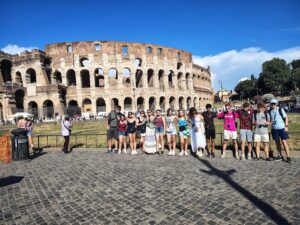
For ten unforgettable days, a group of Kingswood Oxford students traded textbooks for temples, classrooms for cobblestone streets, and lessons about the ancient world for the opportunity to experience it firsthand.
Traveling with their Latin teachers, Stephen Sullivan and James Ishiguro, students embarked on an immersive journey through Italy and Greece, exploring some of the most significant historical and cultural landmarks of the ancient world. While many of the travelers study Latin at KO, the trip welcomed students with diverse academic interests, offering meaningful connections to history, art history, architecture, language, and culture.
The adventure began in Rome, where students immediately found themselves surrounded by nearly three thousand years of history. From the grandeur of the Pantheon and Piazza del Popolo to the bustling streets filled with cafés, fountains, and piazzas, the Eternal City became an outdoor classroom. The following day brought a visit to Vatican City, where students explored the Vatican Museums, marveled at Michelangelo’s breathtaking Sistine Chapel ceiling, and stood in the expansive St. Peter’s Square.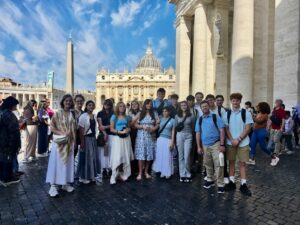
No study of ancient Rome would be complete without stepping inside the Colosseum and wandering through the Roman Forum. As students walked the same streets once traveled by emperors, senators, and citizens, classroom discussions about Roman civilization suddenly became tangible. Later that day, students continued to discover Rome on their own, visiting iconic landmarks including the Trevi Fountain and the Spanish Steps while gaining confidence in navigating one of Europe’s great cities.
The journey continued south with a ferry ride to the picturesque island of Capri, then to the charming seaside town of Sorrento. Students experienced another side of Italy, taking in dramatic coastal views and sampling authentic regional cuisine.
One of the trip’s most memorable educational experiences came during a visit to the ancient city of Pompeii. Preserved beneath volcanic ash after the eruption of Mount Vesuvius in A.D. 79, the remarkably intact city offered students an extraordinary glimpse into daily Roman life. Walking through ancient homes, marketplaces, and streets provided a vivid perspective that no textbook could fully capture.
That evening, the group boarded an overnight ferry to Greece, beginning the second half of their adventure.
After arriving in Patras, students traveled to Delphi, once considered by the ancient Greeks to be the center of the world. Exploring the archaeological site and museum allowed students to deepen their understanding of Greek mythology, religion, and politics while seeing artifacts they had previously encountered only in photographs or classroom discussions.
One of the highlights of the trip came later that evening during a traditional Greek taverna experience in Athens. Students enjoyed authentic Greek cuisine while experiencing local music, traditional dancing, and even the spirited custom of plate throwing. The lively celebration offered a memorable introduction to modern Greek culture while reinforcing the idea that these ancient civilizations continue to influence life today.
The final full day brought students to Athens and one of the world’s most recognizable landmarks, the Acropolis. Standing before the Parthenon and overlooking the city below, students gained a new appreciation for the achievements of ancient Greece and its enduring influence on democracy, philosophy, architecture, and the arts. The group also visited the site of the first modern Olympic Games and Syntagma Square before spending time exploring the city independently.
For the Latin faculty, the trip represented much more than sightseeing. “Most of our students take Latin with us, but not all,” Ishiguro said. “Regardless, everyone was able to experience incredible architecture and ancient sites that connect directly to what we study, not just in Latin, but in history and art history as well. They also had opportunities to engage with the modern cultures and languages of both Italy and Greece, making the experience even richer.”
Sometimes the best way to understand history isn’t to read about it, it’s to walk through it.