Local Partnerships
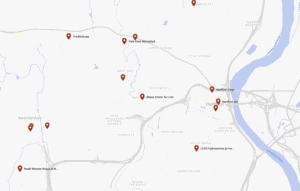
The Hartford community is an extension of the KO campus
Schools that engage with local learning harness the power of the real world to motivate students and increase the relevance of the curriculum. In essence, local partnerships ask students to apply their classroom learning within a real-life situation, whether a meeting with a non-profit organization, benchwork at a biomedical lab, or a presentation at an art museum. One key accelerator for local learning is the richness of the context: in the medical lab, students don’t just learn the facts of science but also see firsthand what scientists do every day; in the art museum, students don’t just learn about art (or even analyze it) but also see how exhibits bring those ideas to life for visitors. This authenticity is compelling, and it helps students understand the power and purpose of their learning.
Many teachers at KO have been designing local learning experiences to energize their curriculum for years. Our Strategic Vision builds on these practices and deepens them, bringing more application and relevance to all KO courses.
ct river museum
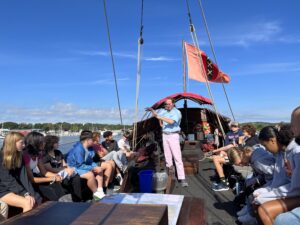
The Connecticut River Watershed is the Form 1 English, science, and history classroom. Through the lenses of science, history, and literature, students examine the biological, chemical, geological, and hydraulic features of water, its role in sustaining and shaping the economic, political, and societal structures of indigenous peoples and European and African settlers in the region, and the cultural and metaphoric meanings and interpretations of rivers expressed in myths, legends, writing, and art.
Hartford 400
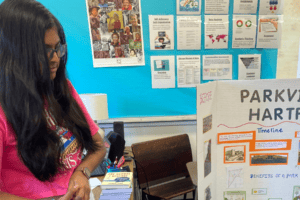
Students in our Global Cities class work on projects aligned with Hartford 400, the river-centered vision plan for Hartford that integrates our environmental, economic, social, transportation, and cultural aspirations.
Sturbridge village
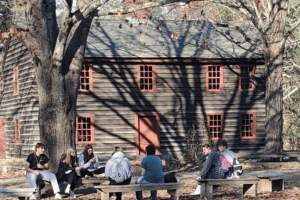
Upper School history and APUSH classes simulate town meetings in the village church to discuss two different options for supporting the town’s poorest people – participatory democracy in action.
Park Watershed
Form 2 history students’ study of the Power of Water includes a presentation from the Park Watershed organization, which discussed the problems facing urban rivers. Our students helped research what they deemed the most significant challenges, as the representative created a Cultural Landscape for Connecticut DEEP. The students shared ideas on reducing their impact on the park river.
Harriet Beecher Stowe House
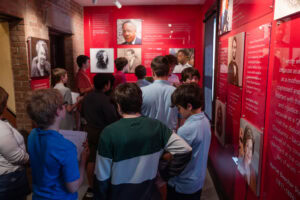
Seventh-grade history classes visit the Stowe House for a tour, examine the racist artifacts from that time, and discuss the implications and narratives of that period.
Local Leaders
Guest speakers in the Upper School Civics elective include Mayor Cantor, West Hartford lieutenant police chief, Connecticut House Representative Jillian Gilcrest, Connecticut State Senator Derck Slap, Connecticut House Speaker Matt Ritter, a KO alum, and West Hartford Deputy Mayor Liam Sweeney. Students give presentations to these speakers on various topics and share their feedback with the students.
West Hartford food pantry
As a result of the Middle School students’ work from “The Hunger Gap” skills incubator course, they have revamped how we engage with Loaves and Fishes and the West Hartford Food Pantry in their food drives. After researching and interviewing two food pantries and the directors of Loaves and Fishes, the students have learned that knowing what people need before you give is essential. “We have to think about what people need, not what you want to give them.”
Goodspeed Opera House
Middle School students watch a production of Dreamgirls.
McAuley Assisted living
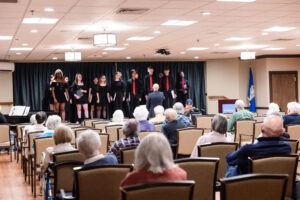
- KO choral students travel to the nursing home to sing songs for and with the residents.
- Students in the engineering class meet with residents who share their obstacles to living their best lives. The students brainstormed ideas and presented them at a later date.
Local Libraries
Upper School students explore book banning and interview local librarians in their towns.
Industry experts
Students connect with experts in various fields, including Dr. Nancy Friedman in the biomedical field.
Keney Park sustainability project
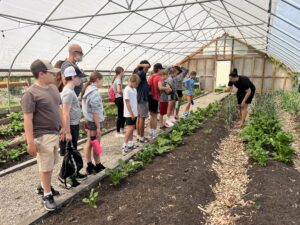
Upper Prep students visit the park and urban farm to study food insecurity and food deserts.